Bridging the Gap: How Private Infrastructure Developers Are Answering America's $2.3 Trillion Modernization Challenge
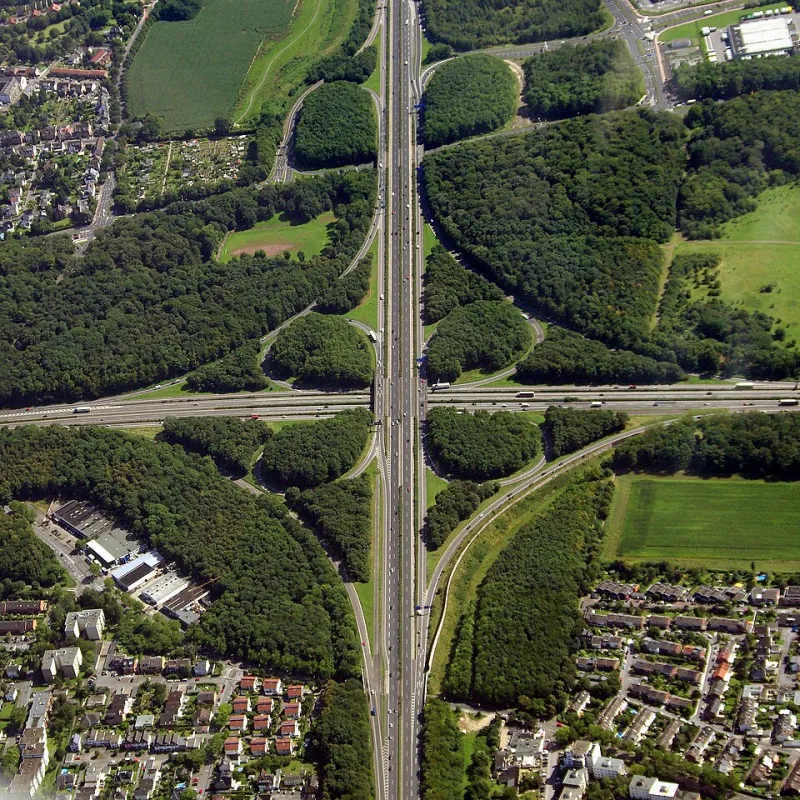
Photo: El Grafo, CC BY-SA 3.0, via Wikimedia Commons
The numbers are difficult to ignore. According to the American Society of Civil Engineers' most recent Infrastructure Report Card, the United States faces a staggering $2.3 trillion deficit in infrastructure investment over the coming decade. Roads are deteriorating faster than they are being repaired. Water mains installed before World War II continue to serve major metropolitan areas. Nearly 42 percent of the nation's bridges are more than 50 years old. These are not abstract statistics—they represent real costs absorbed by businesses, municipalities, and American families every single day.
For decades, federal and state appropriations served as the primary engine of infrastructure development. That model, while foundational, has proven insufficient to meet the accelerating demands of a growing economy and an aging physical plant. Into this gap, private development firms have emerged as indispensable partners in the effort to modernize America's built environment.
The Scale of the Deficit: Sector by Sector
Understanding the breadth of America's infrastructure challenge requires examining specific sectors rather than treating the issue as a monolithic problem.
Bridges and Surface Transportation
The Federal Highway Administration estimates that more than 7,500 bridges across the country are classified as structurally deficient. While that figure represents an improvement over previous decades, the pace of remediation remains slower than the rate of deterioration in many states. The 2021 Infrastructure Investment and Jobs Act allocated $110 billion for roads and bridges—a meaningful commitment, but one that engineering analysts broadly acknowledge falls short of closing the full gap within a reasonable timeframe.
Water and Utility Infrastructure
Perhaps no sector illustrates the depth of the modernization crisis more vividly than water infrastructure. The American Water Works Association estimates that the country will need to invest more than $1 trillion over the next 25 years simply to maintain and expand drinking water systems. Aging cast-iron mains, lead service lines in older cities, and overwhelmed stormwater systems represent compounding liabilities for municipalities operating under constrained budgets. The situation is equally pressing in the energy sector, where grid modernization to accommodate distributed renewable generation and increasing electrification demands significant capital deployment.
Freight and Intermodal Transportation
The supply chain disruptions of recent years exposed critical vulnerabilities in the nation's freight network. Port capacity constraints, aging rail corridors, and inadequate last-mile logistics infrastructure contributed to billions of dollars in economic losses. Addressing these deficiencies requires not only capital but sophisticated coordination between public agencies, private operators, and development specialists capable of managing complex, multi-stakeholder projects.
The Rise of Public-Private Partnerships
Public-private partnerships—commonly referred to as P3s—have emerged as one of the most consequential mechanisms for accelerating infrastructure delivery in the United States. Under these arrangements, private firms bring capital, engineering expertise, and operational efficiency to projects that public agencies have traditionally struggled to advance on their own.
The P3 model takes several forms. Availability payment structures allow government agencies to retain ownership of an asset while compensating a private partner for financing, building, and maintaining it over a defined concession period. Revenue-risk models, more common in toll roads and certain utility projects, transfer demand risk to the private partner in exchange for the right to collect user fees. Design-build-finance-operate-maintain contracts consolidate project delivery into a single accountability structure, reducing the coordination failures that have historically plagued large public works.
States including Virginia, Texas, and Colorado have developed mature P3 frameworks that have successfully delivered major transportation projects. The I-66 Express Lanes project in Northern Virginia and the SH 288 toll lanes in the Houston metropolitan area stand as instructive examples of what well-structured private-sector engagement can achieve.
What Private Developers Bring to the Table
The contribution of private development companies extends well beyond capital. Firms operating in this space bring integrated capabilities that public agencies frequently lack in-house: advanced project management methodologies, supply chain relationships that can compress procurement timelines, and the ability to deploy specialized engineering talent across multiple disciplines simultaneously.
At Slinfra Developers, our approach to infrastructure development is grounded in the recognition that every project—whether a utility corridor, a transportation interchange, or a large-scale site development—carries implications that extend far beyond its physical footprint. The communities that depend on these assets, the businesses that rely on them for operational continuity, and the public agencies that will ultimately steward them all have legitimate interests that must be carefully balanced throughout the development process.
This perspective informs how we engage with financing structures. Rather than treating P3 arrangements as purely financial instruments, we view them as frameworks for aligning incentives across a project's full lifecycle. When a developer's compensation is tied to long-term asset performance rather than simply to construction completion, the decisions made during design and engineering phases reflect a fundamentally different calculus—one that prioritizes durability, maintainability, and operational efficiency over short-term cost minimization.
Innovative Financing Models Gaining Traction
Beyond traditional P3 structures, several financing innovations are reshaping how large-scale infrastructure projects are capitalized.
Infrastructure-focused investment funds have grown substantially over the past decade, channeling institutional capital from pension funds, sovereign wealth vehicles, and insurance companies into long-duration assets that align well with their liability profiles. This patient capital, when properly structured, can support infrastructure development at a scale and timeline that shorter-horizon financing cannot.
Green bonds and sustainability-linked financing instruments have also gained meaningful traction, particularly for projects with demonstrable environmental benefits—water reclamation facilities, resilient coastal infrastructure, and clean energy transmission assets among them. The ability to access this capital pool has become a competitive differentiator for developers with genuine sustainability credentials.
Opportunity Zone designations, established under the 2017 Tax Cuts and Jobs Act, have directed private investment toward infrastructure-adjacent development in economically distressed communities, with mixed but instructive results that continue to inform policy refinement.
Looking Ahead
The trajectory of American infrastructure investment points toward a sustained expansion of the private sector's role. Federal appropriations, while substantial, will not close the existing deficit on their own. The institutional frameworks for P3 delivery are maturing. The capital markets have demonstrated genuine appetite for well-structured infrastructure assets.
What remains essential is the quality of the development partners engaged to execute these projects. Infrastructure development at scale demands technical depth, financial sophistication, and an unwavering commitment to delivering assets that serve their intended purpose reliably and efficiently over decades of use.
The $2.3 trillion gap is a daunting figure. It is also an opportunity—to rebuild aging systems with modern materials and methods, to incorporate resilience against climate-related stressors, and to create infrastructure that serves American communities not merely for the next decade but for the next generation. Private development companies that bring genuine expertise and long-term perspective to this challenge have a meaningful role to play in determining whether that opportunity is realized.