Stranded Capital: Why Billions in Federal Infrastructure Funding Fails to Reach the Projects That Need It Most
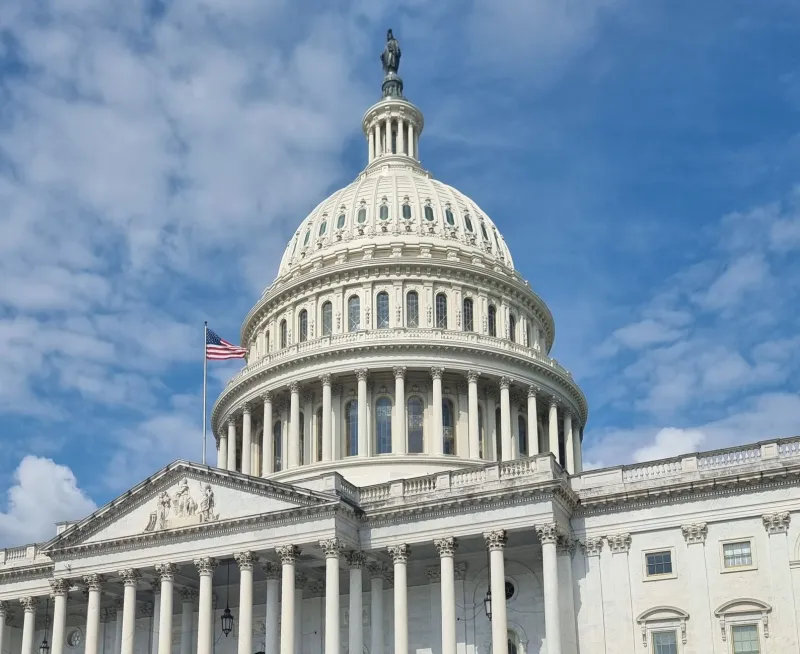
The numbers, on the surface, should inspire confidence. The Infrastructure Investment and Jobs Act (IIJA) committed more than $550 billion in new federal spending toward roads, bridges, water systems, broadband, and energy infrastructure across the United States. Federal agencies have since stood up dozens of grant programs, loan guarantee mechanisms, and competitive funding windows designed to accelerate project delivery at every scale. Yet for a substantial segment of the development community—mid-market firms, regional contractors, and municipal partners without dedicated grant teams—those dollars remain frustratingly out of reach.
Estimates from policy analysts and infrastructure finance experts suggest that well over $100 billion in authorized federal funding has yet to be obligated or drawn down in any meaningful way. Projects are stalling. Timelines are slipping. And the developers best positioned to execute on community-critical infrastructure work are, in many cases, the least equipped to navigate the institutional machinery required to access it.
Understanding why this paradox exists—and how to overcome it—is one of the defining operational challenges of this infrastructure moment.
The Absorption Problem Nobody Wants to Discuss
Federal funding programs are frequently designed with large-scale recipients in mind: state departments of transportation, major metropolitan authorities, or established institutional developers with full-time compliance and finance departments. The application requirements, matching fund obligations, and reporting frameworks that accompany most IIJA-adjacent programs are calibrated for organizations with significant administrative infrastructure.
Mid-market developers and regional firms, by contrast, often operate with lean back-office teams. Their project managers are focused on execution, not federal procurement strategy. Their finance departments are structured around construction lending and equity deployment, not navigating the nuances of BUILD grants, RAISE applications, or TIFIA loan processing timelines. The result is a structural mismatch: capital is available in principle, but the pathway to that capital demands institutional capacity that many qualified firms simply do not have.
This is not a reflection of project quality or developer competence. It is a capacity gap—one that the federal system has been slow to acknowledge and even slower to address.
Bureaucratic Friction as a Capital Barrier
The application processes governing most major federal infrastructure funding programs are genuinely complex. A competitive RAISE grant application, for example, requires detailed benefit-cost analyses, environmental review documentation, letters of support from multiple governmental entities, and narrative responses that must demonstrate alignment with federal priority frameworks that shift with each administration. The process from initial concept to award can span eighteen months or longer.
For a regional developer managing active project portfolios, that timeline is operationally prohibitive. Capital deployment decisions cannot wait eighteen months. Land control agreements expire. Construction windows close. Subcontractor relationships dissolve. By the time a federal award is confirmed, the project conditions that made the application viable may have changed materially.
Loan guarantee programs through the Department of Transportation and the Department of Energy face similar friction. TIFIA, WIFIA, and the DOE Loan Programs Office offer genuinely favorable terms—low fixed rates, long maturities, substantial leverage—but the underwriting process is intensive, the credit review is rigorous, and the timeline from letter of interest to term sheet routinely extends well beyond what private-market alternatives require. For developers without prior experience in federal credit programs, the learning curve alone can be disqualifying.
The Matching Fund Trap
Many federal programs require applicants to demonstrate a local or private match—typically ranging from 20 to 50 percent of total project cost. In theory, this requirement ensures that federal dollars are leveraged rather than substituted. In practice, it creates a financing sequencing problem that disproportionately affects smaller developers.
Securing match funding requires either committed equity, a letter of credit, or a local government appropriation—all of which must be arranged before a federal award is confirmed. Lenders and equity partners are often reluctant to commit capital to a project whose federal funding is uncertain. The federal application process, meanwhile, looks more favorably on applicants who can demonstrate committed match funding. The result is a circular dependency: you need the match to win the grant, and you need the grant to secure the match.
Navigating this trap requires creative capital structuring. Some developers have used bridge facilities specifically designed to satisfy match requirements during the application window, with the understanding that those facilities will be retired upon federal award. Others have pursued phased project structures that allow initial private development to satisfy match obligations while federal funding is sought for subsequent phases. Neither approach is simple, but both represent viable paths for developers willing to engage the problem strategically.
Building the Institutional Capacity to Compete
For firms serious about accessing federal infrastructure capital, the investment in institutional readiness is non-negotiable. That means several things in practice.
First, it means developing internal familiarity with the federal funding landscape before a specific project requires it. The IIJA funding matrix is not static—new programs are stood up, funding windows open and close, and agency priorities evolve. Firms that treat federal funding as an ad hoc resource will consistently find themselves behind the curve. Those that maintain ongoing awareness of program timelines and eligibility criteria are far better positioned to move quickly when the right opportunity emerges.
Second, it means investing in grant writing and federal procurement expertise, either through dedicated staff or through partnerships with specialized consultants. The quality of a federal application is a genuine competitive differentiator. Poorly structured benefit-cost analyses, incomplete environmental documentation, or misaligned narratives are among the most common reasons competitive applications fail—not the underlying project merit.
Third, it means engaging early with state infrastructure finance authorities and metropolitan planning organizations. In many states, these entities serve as intermediaries between federal programs and local project sponsors. They maintain relationships with federal program officers, understand application preferences, and can provide technical assistance that meaningfully improves competitive positioning. Developers who treat these relationships as strategic assets—not as bureaucratic checkpoints—consistently outperform those who do not.
Positioning Projects for Institutional Funding Success
Beyond organizational readiness, project-level characteristics significantly influence federal funding competitiveness. Federal reviewers consistently favor projects that demonstrate clear public benefit, geographic and demographic equity considerations, environmental resilience, and alignment with stated federal priority areas. Developers who design projects with these criteria in mind from the outset—rather than retrofitting justifications after the fact—produce materially stronger applications.
Project readiness is equally critical. Federal programs increasingly weight applications based on demonstrated readiness to proceed: completed environmental reviews, secured right-of-way, finalized design documentation, and evidence of local governmental support. Projects that can credibly commit to near-term construction starts are viewed as lower-risk deployments of federal capital—and are rewarded accordingly in competitive scoring.
Closing the Gap
The infrastructure funding paradox is real, but it is not immutable. The capital exists. The projects exist. The gap between them is a function of institutional capacity, process complexity, and capital sequencing challenges—all of which are addressable with the right strategic approach.
For mid-market and regional developers, the path forward requires treating federal funding not as a windfall to be pursued opportunistically, but as a capital channel to be cultivated systematically. That means building relationships, developing expertise, structuring projects for competitive positioning, and engaging the process with the same rigor applied to every other phase of infrastructure development.
The firms that close that gap will not only access a transformative source of capital. They will be better positioned to deliver the infrastructure that American communities urgently need—and that the federal investment framework was always intended to support.