Building the Builders: Rethinking How Infrastructure Developers Compete for Skilled Labor in a Depleted Market
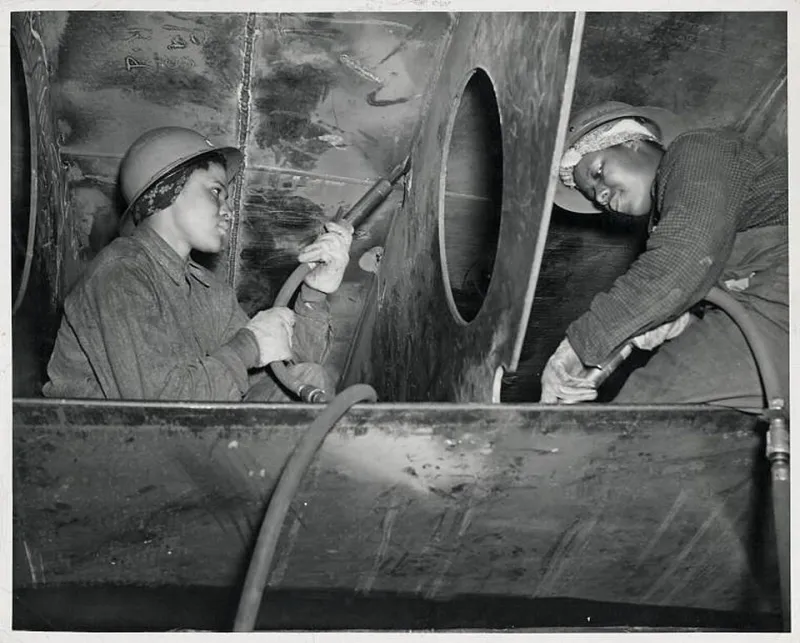
Photo: E. F. Joseph, Public domain, via Wikimedia Commons
Ask any project executive managing a major infrastructure program in the United States today to name their most persistent operational challenge, and the answer is unlikely to be permitting, financing, or material procurement — though all three remain formidable. The answer, with increasing frequency, is people. Specifically, the accelerating difficulty of finding, hiring, and keeping the skilled tradespeople and technical professionals on whom every infrastructure project fundamentally depends.
This is not a new observation. The construction industry has discussed the skilled labor shortage for the better part of two decades. What has changed is the severity of the constraint and the degree to which it is now actively shaping project outcomes. Programs that are fully funded, permitted, and designed are being delayed not because of regulatory obstruction or supply chain failure, but because the workforce required to execute them is not available in sufficient numbers, at the right locations, or with the right skill profiles. That is a different kind of problem — and it requires a different kind of response.
The Anatomy of a Workforce Crisis
Understanding the current labor environment requires acknowledging that it is the product of several converging pressures, not a single cause.
The first is demographic. The construction and infrastructure workforce is aging at a rate that outpaces recruitment. A significant cohort of experienced ironworkers, electricians, heavy equipment operators, and civil engineers who entered the industry in the 1980s and 1990s is now approaching or has already reached retirement age. The institutional knowledge and field competency they carry with them is not easily replicated, and the pipeline of younger workers entering the trades has not kept pace with the volume of experienced professionals exiting.
The second pressure is competitive. Infrastructure developers are no longer competing for skilled labor only against other construction firms. The expansion of domestic manufacturing — driven in part by federal incentives for semiconductor fabrication, electric vehicle production, and clean energy equipment — has created substantial demand for many of the same trades that infrastructure programs require. A licensed electrician or experienced millwright has options that did not exist five years ago, and those options frequently include climate-controlled facilities, predictable schedules, and benefit packages that field construction work has historically struggled to match.
The third pressure is cultural. Construction and infrastructure work carries a perception problem among younger Americans and their families. Despite offering wages that are competitive with — and in many skilled categories superior to — those available in four-year degree pathways, the trades have been systematically undervalued in educational and career counseling contexts for a generation. The consequence is a self-reinforcing cycle in which reduced enrollment in vocational and apprenticeship programs produces workforce gaps that are then used to justify further underinvestment in those same programs.
Why Traditional Recruitment Models Are Failing
For much of the past century, the construction industry recruited labor through a combination of union hall referrals, word-of-mouth networks, and the gravitational pull of active project sites in high-unemployment communities. That model functioned reasonably well in an environment where construction offered a clear wage premium over available alternatives and where demographic replenishment kept pace with attrition.
Neither of those conditions reliably holds today. The wage premium has eroded in many markets relative to competing sectors. Demographic replenishment has not kept pace. And the word-of-mouth networks that once channeled young workers into the trades are less effective in communities where fewer households have direct connections to construction employment.
Developers and contractors that continue to rely on reactive hiring — posting positions when a project mobilizes and hoping the market responds — are discovering that the market increasingly does not respond, or responds with candidates who require substantially more onboarding and development than the project schedule can accommodate. The fundamental posture of the industry toward workforce development needs to shift from reactive to structural.
Building Pipelines, Not Just Payrolls
The developers and contractors who are navigating the current labor environment most effectively share a common characteristic: they have invested in workforce development as a core business function rather than treating it as an HR administrative task.
In practical terms, this means establishing formal partnerships with community colleges, technical institutes, and registered apprenticeship programs before specific project needs arise. It means participating in pre-apprenticeship programs that introduce high school students — particularly those from communities adjacent to active infrastructure corridors — to the trades as a deliberate career pathway. It means working with workforce development boards and state labor agencies to align training curricula with the specific skill profiles that large-scale infrastructure programs require.
These partnerships take time to produce results. A pre-apprenticeship cohort that begins training today will not be field-ready for a program that mobilizes in six months. But for developers with a sustained project pipeline — which describes any firm operating at enterprise scale in the current infrastructure investment environment — the calculus is straightforward. The workforce that will staff programs three and five years from now is being shaped by decisions made today.
Compensation and Culture as Retention Instruments
Attracting workers into the pipeline is necessary but insufficient if the conditions of employment drive them back out. Burnout and attrition remain significant problems in construction and infrastructure work, and they are not purely functions of physical demand. Schedule unpredictability, inadequate benefits structures, limited advancement visibility, and workplace cultures that have been slow to evolve are all contributing factors.
Competitive compensation in the current environment means more than prevailing wage compliance. It means transparent pay progression frameworks that reward skill development and tenure. It means benefits packages — particularly health coverage and retirement provisions — that are structured to be genuinely competitive with what manufacturing and technology employers are offering. And it means taking seriously the scheduling and quality-of-life concerns that consistently appear in exit interviews and workforce surveys as primary drivers of voluntary turnover.
Workplace culture is harder to prescribe but no less important. Infrastructure development has made meaningful progress in recent years on safety culture, driven in part by regulatory pressure and in part by genuine leadership commitment. The same intentionality needs to be applied to inclusion, mentorship, and the professional development of workers at every level of the organization. Firms that have done this work report measurably better retention outcomes — and in a market where every experienced worker retained is a worker who does not need to be replaced and retrained, retention is a direct financial performance metric.
The Developer's Role in a Systemic Solution
No single developer or contractor can resolve a workforce shortage that is structural in origin. But the industry does not have the option of waiting for a systemic solution to emerge from policy or demographic change before acting. The programs are funded. The infrastructure needs are documented. The schedules are commitments. Workforce availability is the constraint that will determine whether those commitments are met.
At Slinfra Developers, we approach workforce capacity as a project delivery variable — something to be planned for, invested in, and actively managed across the full lifecycle of a program. That means engaging with training and apprenticeship partners early, structuring compensation and working conditions to be genuinely competitive, and building the kind of organizational culture that makes experienced professionals choose to stay.
The infrastructure of tomorrow will be built by the workforce that the industry develops today. That development is not someone else's responsibility. It is ours.