From Fabrication Facility to Operational Asset: How Modular Construction Is Compressing Enterprise Infrastructure Timelines
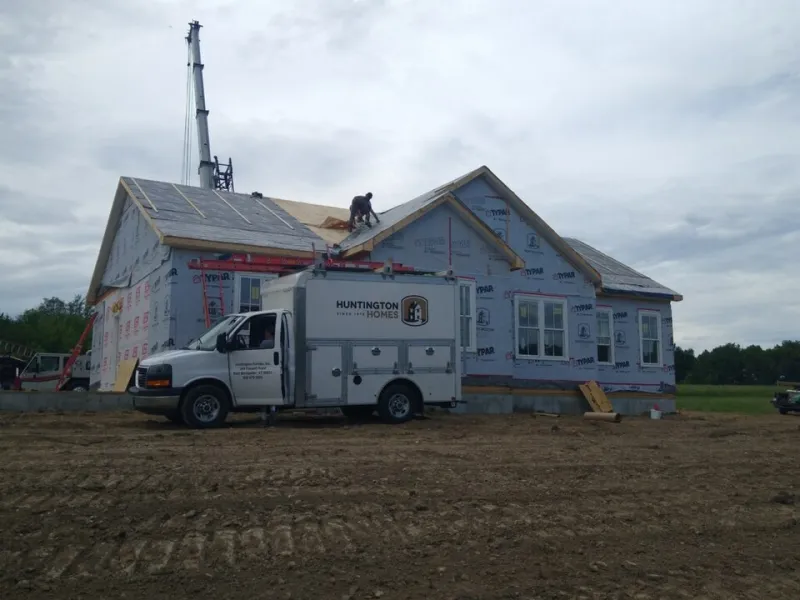
Photo: Joshua Vignona, CC BY-SA 4.0, via Wikimedia Commons
For much of the twentieth century, large-scale infrastructure development operated on a timeline that enterprise clients accepted as immutable. A major data center campus, utility substation, or industrial processing facility required years of on-site construction, weather delays, sequential trade scheduling, and the inevitable complications that arise when complex systems are assembled in the open air. That timeline, and the cost structure attached to it, was simply the cost of doing business at scale.
That assumption is now being systematically challenged — not by a single technological breakthrough, but by a coordinated shift in construction methodology that is reshaping how sophisticated developers and their enterprise clients think about project delivery.
The Core Principle: Move Work Off-Site
Modular and prefabricated construction is not a new concept. Prefabrication has been employed in residential construction and light commercial development for decades. What is genuinely new is the scale and sophistication at which these techniques are now being applied to critical infrastructure — and the measurable impact they are producing on project timelines and cost profiles.
The foundational principle is straightforward: components, modules, or entire functional assemblies are manufactured in controlled factory environments and transported to the project site for installation. Rather than building a substation from raw materials in the field, for example, a modular approach produces pre-engineered electrical rooms, transformer assemblies, and control system enclosures in a facility where quality is consistent, labor is specialized, and weather is not a variable.
The implications for project scheduling are significant. Traditional on-site construction is largely sequential — one phase must be substantially complete before the next can begin. Modular construction allows site preparation and foundation work to proceed simultaneously with module fabrication. By the time a site is ready to receive components, those components already exist. The critical path shortens dramatically.
What the Data Shows
The productivity gains associated with modular construction are increasingly well-documented. According to research published by McKinsey & Company, modular construction can reduce overall project timelines by 20 to 50 percent compared to conventional methods, with cost savings ranging from 10 to 20 percent depending on project type and complexity. In the infrastructure sector specifically, where carrying costs and delayed operational revenue can be substantial, those figures translate to significant financial advantage for enterprise clients.
A 2022 analysis by the Modular Building Institute found that off-site construction reduces on-site labor hours by an average of 25 percent — a meaningful consideration in a construction labor market that has faced persistent workforce shortages across most of the United States. Fewer on-site labor hours also correlates with reduced safety incidents, which carries both human and liability implications for project owners.
For data center infrastructure — one of the fastest-growing segments of enterprise capital expenditure — modular deployment has become something close to standard practice among hyperscale operators. Facilities that once required 24 to 36 months to deliver are now being brought to operational status in 12 to 18 months through aggressive prefabrication of power distribution, cooling, and structural systems. The competitive advantage of faster deployment in that sector is not abstract; it is measured in revenue quarters.
Emerging Technologies Amplifying the Modular Advantage
The effectiveness of modular construction is being further enhanced by a set of converging technologies that improve precision, coordination, and quality assurance throughout the fabrication and installation process.
Building Information Modeling (BIM) has become foundational to high-quality modular infrastructure delivery. By creating detailed three-dimensional digital models of every component and assembly before fabrication begins, project teams can identify dimensional conflicts, access constraints, and systems integration issues in the digital environment — where corrections cost hours rather than weeks. The same model that guides fabrication informs installation sequencing and, ultimately, facility operations.
Advanced prefabrication facilities are increasingly incorporating automated cutting, welding, and assembly equipment that produces components to tolerances difficult to achieve in field conditions. This precision matters particularly in infrastructure applications where mechanical, electrical, and structural systems must interface with exactness. A prefabricated electrical room that arrives on-site with conduit runs, cable trays, and equipment mounting already installed to specification eliminates an entire category of field coordination risk.
Digital twin technology is emerging as a complementary capability, allowing enterprise clients to model operational performance of modular systems before physical installation is complete. This enables commissioning activities to begin earlier in the project lifecycle and supports more rapid transition from construction to operational status.
Implementation Strategy for Enterprise Clients
Realizing the full timeline and cost benefits of modular construction requires deliberate planning from the earliest stages of project development. The following strategic considerations are relevant for enterprise clients evaluating this approach.
Design for modularity from the outset. Retrofitting a conventional design for modular delivery captures only a fraction of the available benefit. Projects that achieve the most dramatic timeline compression are those in which the design process explicitly accommodates modular fabrication — standardizing dimensions, optimizing module sizes for transportation, and sequencing systems integration to align with factory production schedules.
Select fabrication partners with relevant infrastructure experience. Not all prefabrication capabilities are equivalent. Enterprise infrastructure projects require fabricators with demonstrated experience in the specific systems involved — whether electrical, mechanical, structural, or a combination. Vetting fabrication partners with the same rigor applied to general contractors is essential.
Integrate logistics planning into the project schedule. Module transportation from fabrication facility to project site introduces logistics variables — permitting for oversized loads, route planning, delivery sequencing — that must be managed proactively. For large projects involving dozens of modules, logistics coordination is itself a project management discipline.
Align procurement timelines with fabrication lead times. Long-lead equipment items — transformers, switchgear, specialized mechanical components — must be procured in coordination with fabrication schedules to avoid bottlenecks that negate timeline gains. Early procurement planning is a non-negotiable element of effective modular project execution.
The Slinfra Perspective
At Slinfra Developers, modular and prefabricated construction methodologies are integral to how we approach enterprise infrastructure delivery. Our project management framework is built around the recognition that time is a material cost for our clients — and that every week between groundbreaking and operational status represents both direct expense and deferred value.
The shift from field-built to factory-built infrastructure is not simply a construction technique. It is a fundamental reorientation of how project risk is managed, how quality is assured, and how enterprise clients experience the transition from capital investment to productive asset. For organizations operating in sectors where infrastructure capacity is a competitive variable, that reorientation is no longer optional — it is a strategic imperative.
The timeline from fabrication facility to operational asset is compressing. The developers and enterprise clients who recognize that shift early will be the ones best positioned to capitalize on it.