Condemned to Repeat: The Structural and Systemic Reasons America's Infrastructure Fails in the Same Corridors, Time and Again
There is a particular kind of frustration reserved for problems that are both entirely predictable and seemingly impossible to solve. For engineers, municipal planners, and enterprise clients who depend on reliable infrastructure, that frustration is familiar. Certain segments of America's built environment — specific highway interchanges, aging water distribution networks, rail corridors that have flooded three times in a decade — continue to fail with a regularity that defies statistical coincidence. They are not anomalies. They are symptoms.
The American Society of Civil Engineers gave the nation's infrastructure a C- in its most recent Infrastructure Report Card. That grade has barely moved in two decades. The question worth asking is not simply why the grade remains low, but why the same infrastructure assets keep dragging it down.
The Geography of Chronic Failure
Infrastructure failures are not distributed evenly across the United States. They cluster. The Northeast Corridor — one of the most heavily traveled rail passages in the world — experiences recurring service disruptions tied to infrastructure that, in some segments, dates to the early twentieth century. Portions of the water distribution network in the Great Lakes region were installed before the Second World War and have been patched continuously rather than replaced. Coastal highway infrastructure from the Gulf Coast to the Mid-Atlantic faces a compounding cycle of storm damage, emergency repair, and renewed vulnerability.
These corridors share a common profile: high utilization, aging foundational systems, and a history of incremental maintenance rather than comprehensive modernization. The geography of failure is, in large part, the geography of deferred investment.
What makes these cases particularly instructive is that the failures are rarely surprising to the engineers closest to them. Inspection data, load assessments, and material degradation analyses frequently identify risk years — sometimes decades — before a visible failure event. The technical knowledge exists. The gap lies elsewhere.
Why Patch-and-Repair Cycles Persist
The conventional repair model operates on a logic that is fiscally understandable but infrastructurally counterproductive. When a system fails or approaches failure, emergency or maintenance funding is allocated to restore it to operational status as efficiently as possible. The objective is continuity, not transformation. This approach is not negligent — it reflects genuine budget constraints and the immediate political pressure to restore service. But it consistently reproduces the conditions that led to the failure in the first place.
Consider a deteriorating bridge deck. A surface rehabilitation may extend its service life by eight to twelve years at a fraction of the cost of full reconstruction. On a spreadsheet, that decision appears rational. Over a thirty-year horizon, however, the cumulative cost of repeated rehabilitations — each one addressing symptoms rather than the underlying structural condition — frequently exceeds the cost of a single comprehensive replacement. More critically, each successive patch narrows the window for proactive intervention and increases the probability of a catastrophic failure event.
This dynamic is well understood within the engineering profession. The challenge is that infrastructure investment decisions are rarely made purely on engineering merit.
The Governance and Financing Barrier
American infrastructure is governed through a fragmented system of federal, state, and local authorities, each operating within distinct budget cycles, procurement frameworks, and political mandates. A single infrastructure corridor may fall under the jurisdiction of multiple agencies with overlapping but non-coordinated responsibilities. This fragmentation creates structural impediments to the kind of long-horizon planning that genuine modernization requires.
Federal funding mechanisms, while substantial in aggregate, are frequently structured around specific project types and cost-sharing arrangements that favor incremental maintenance over wholesale reconstruction. State legislatures operate on two- to four-year budget cycles that are poorly suited to infrastructure projects with ten- to twenty-year development horizons. Local governments, facing competing demands on limited tax revenue, are often unable to generate the capital required for transformative investment without federal or private partnership.
The result is a financing environment in which the path of least resistance — and often the only fiscally viable path within existing frameworks — is the patch-and-repair cycle that perpetuates chronic failure.
The Technical Dimension: Aging Systems and Compounding Vulnerability
Beyond governance and finance, there is a purely technical dimension to chronic infrastructure failure that deserves direct attention. Many of the nation's most persistently problematic systems were designed to standards that are now obsolete. They were not engineered for current load volumes, contemporary climate conditions, or modern seismic standards. They were built for a different America.
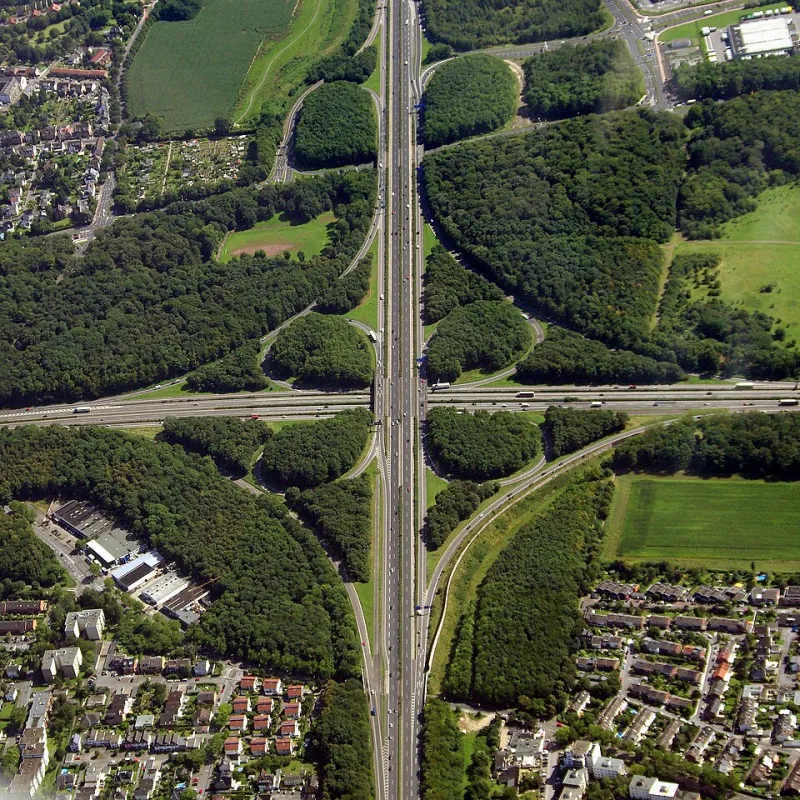
A water main installed in 1940 was designed to serve a population and consumption pattern that no longer exists. A highway interchange configured in 1965 was not modeled for the traffic volumes or vehicle weights common today. When these systems are patched rather than replaced, the underlying design inadequacy is preserved. The infrastructure may be technically operational, but it remains fundamentally mismatched to the demands placed upon it.
This mismatch is not merely an engineering inconvenience. It represents a compounding vulnerability. As climate patterns shift and extreme weather events become more frequent, infrastructure that was already operating at or near design limits faces accelerating stress. The Gulf Coast flooding cycles, the repeated freeze-thaw failures in Northern water systems, and the heat-related rail deformations in the Southwest are all expressions of this underlying incompatibility between legacy design standards and contemporary conditions.
A Modernization-First Framework
At Slinfra Developers, our approach to infrastructure development begins with a premise that the patch-and-repair cycle cannot reach: that the goal of infrastructure investment is not to restore a failing system to its original condition, but to deliver a system capable of meeting the demands of the next fifty years.
This distinction has practical consequences for how projects are scoped, financed, and executed. It means conducting thorough condition assessments that evaluate not just current structural status but projected performance under future load and climate scenarios. It means designing for adaptability — building systems that can be upgraded or expanded without full reconstruction. And it means engaging enterprise clients and public partners in the long-term cost modeling that makes the case for comprehensive modernization over repeated incremental repair.
The corridors that fail repeatedly are not cursed. They are the product of decisions — financial, political, and technical — that prioritized short-term continuity over long-term resilience. Those decisions can be made differently. The engineering capability to build infrastructure that does not fail in the same place twice already exists. What is required is the institutional will, the financial structure, and the development philosophy to deploy it.
Slinfra Developers is committed to that deployment — corridor by corridor, system by system, one comprehensive solution at a time.