Designed to Break: Why Some of America's Smartest Infrastructure Includes Parts Meant to Fail
Photo: Störfix, CC BY-SA 3.0, via Wikimedia Commons
There is a category of engineering decision that looks, to the untrained eye, like a mistake. A component specified to fail at a load well below what the surrounding structure could survive. A connection designed to shear. A wall intended to be destroyed. Enterprise clients reviewing budgets sometimes push back on these choices — why pay for something engineered to break? The answer, refined over a century of American infrastructure practice, is that controlled failure is often the cheapest, safest way to protect a much larger investment.
This is the discipline of planned redundancy, and it deserves a clearer explanation than it usually receives.
The Logic of the Sacrificial Component
The core principle is simple: when a system experiences a load beyond its design capacity, something must give. The engineering question is whether that something is chosen in advance — or chosen by physics. A deliberate weak link fails predictably, in a location selected for easy inspection and replacement. An uncontrolled failure propagates through whatever path stress finds, often the most destructive one.
Electrical systems understood this first. Every residential circuit breaker is a sacrificial component, and the same philosophy scales up to substation protection schemes where fault currents are deliberately steered through devices designed to absorb and interrupt them. The breaker that trips is not a defect. It is the system doing exactly what it was paid to do.
Five Places the Concept Shows Up in Practice
1. Bridge bearings and fuse zones. Modern seismic design in California and the Pacific Northwest frequently incorporates elements intended to yield during a major earthquake — isolator bearings that deform, or sacrificial shear keys that fracture — absorbing energy so the primary superstructure survives. The damaged components are inspected and replaced after the event; the bridge remains standing.
2. Electrical switchgear and fault interrupters. Distribution networks across the US rely on reclosers and fuses that isolate a faulted section so a single downed line does not black out an entire feeder. The momentary outage that annoys a neighborhood is the alternative — a regional one — avoided.
3. Stormwater overflow structures. Combined sewer systems in older American cities include engineered overflow points designed to relieve the system during extreme rainfall. Environmental regulators are working to shrink them, but their existence reflects a deliberate choice: better a controlled release at a designed location than an uncontrolled one through basements and streets.
4. Shear walls and energy-dissipating dampers in tall buildings. High-rise construction from Seattle to Miami increasingly uses damping systems — viscous dampers, buckling-restrained braces — that are, functionally, components expected to deform or require replacement after a major event, protecting the structural frame itself.
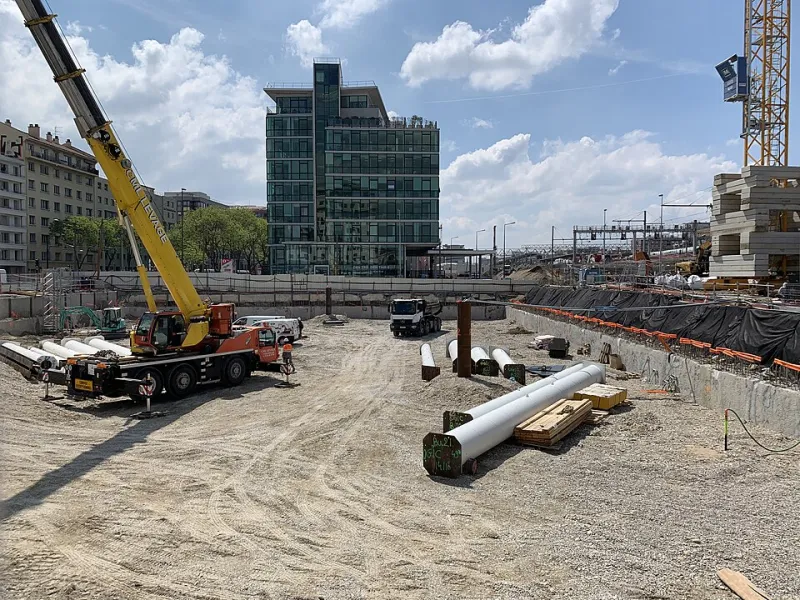
5. Temporary works and sacrificial formwork. On heavy civil projects, falsework and shoring are engineered as expendable systems, consumed in the act of building the permanent structure. Budgeting for them honestly, rather than treating them as overhead to be minimized, is a hallmark of mature project management.
What Enterprise Clients Should Ask
For organizations funding infrastructure, planned redundancy carries three practical implications.
First, lifecycle cost, not first cost, is the correct frame. A system with replaceable sacrificial components will incur maintenance and renewal expenses that a nominally simpler design avoids — until the day it fails catastrophically. Financial models should account for the replacement cycle explicitly, including inspection access and component lead times.
Second, redundancy changes the inspection conversation. Components designed to fail need instrumentation and monitoring so owners know when a sacrificial element has done its job. A failed fuse that goes unnoticed is a system silently operating without protection.
Third, controlled failure must be documented and communicated. Post-event inspection protocols, spare component inventories, and restoration procedures should be part of the deliverable, not an afterthought. The value of a designed weak link disappears if nobody knows it exists.
Rethinking What Good Engineering Means
The instinct to equate durability with quality is deeply held, and understandable. But the most resilient infrastructure in the United States is not the infrastructure that never experiences failure. It is the infrastructure whose failures were anticipated, located, priced, and rehearsed. Designing for controlled failure is not pessimism about the future. It is respect for it — and a recognition that the goal of engineering was never permanence, but protection.