Certified for Yesterday: How Outdated Credentialing Is Blocking the Infrastructure Workforce of Tomorrow
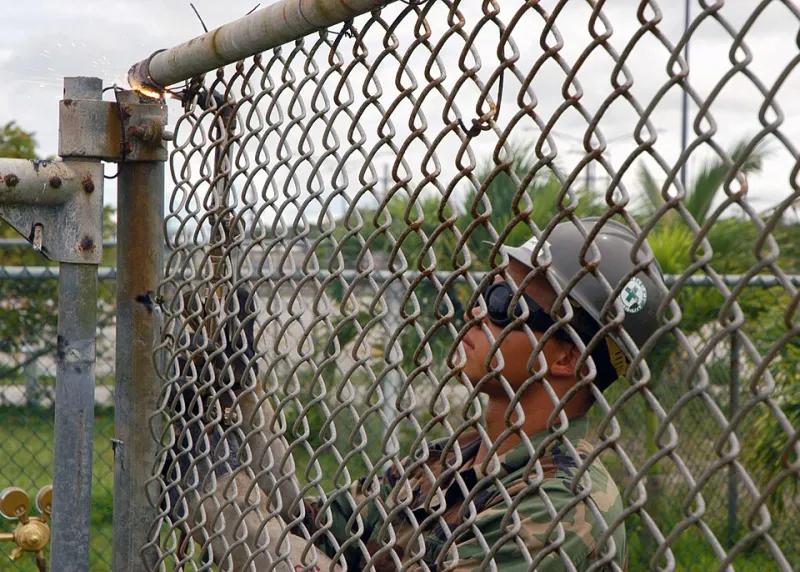
Photo: U.S. Navy photo, Public domain, via Wikimedia Commons
The certifications that govern entry into infrastructure construction trades were largely designed for a version of the industry that no longer exists. As jobsites grow more technologically complex and project systems more deeply integrated, the gap between what a credential verifies and what a project actually demands has widened into a genuine hiring bottleneck. Closing that gap requires more than updating a curriculum—it requires rethinking the relationship between the credentialing system and the industry it is supposed to serve.
What the Credential Verifies, and What the Project Requires
Consider what a journeyman electrician's license certifies in most US states. The core competency framework underlying that credential was substantially established decades ago, oriented around the installation and maintenance of conventional electrical systems in commercial and residential environments. The examination content, the apprenticeship hour requirements, and the practical assessment criteria all reflect that orientation.
Now consider what that same electrician is expected to perform on a contemporary infrastructure project: commissioning building automation systems with networked sensor arrays, integrating power distribution equipment with digital monitoring platforms, troubleshooting firmware-dependent control systems, and coordinating with data infrastructure teams whose work intersects directly with the electrical scope.
The credential and the job description are describing two different roles. And the credential is winning—because hiring managers have no better instrument to evaluate candidates, and candidates have no better signal to send about their capabilities.
This dynamic plays out across virtually every skilled trade category in infrastructure construction. It is not a marginal problem. It is a systemic one.
The Pace of Jobsite Transformation
The technical environment on large-scale infrastructure projects has changed faster in the past ten years than in the preceding thirty. The adoption of Building Information Modeling as a live construction management tool—rather than a design-phase artifact—has created demand for field personnel who can read, navigate, and update digital models in real time. Drone-based survey platforms, augmented reality layout tools, and automated progress tracking systems have become standard on projects above a certain scale threshold.
Subsurface utility mapping using ground-penetrating radar, concrete quality assessment using non-destructive evaluation equipment, structural health monitoring using embedded sensor networks—each of these represents a technical capability that is now routinely required on infrastructure projects and is essentially absent from the competency frameworks underlying the certifications that govern workforce entry.
The credentialing system has not been indifferent to this evolution. Individual unions, community college programs, and trade associations have made incremental curriculum updates. But incremental updates to a fundamentally static system cannot keep pace with a rate of change that is compounding.
How the Gap Becomes a Bottleneck
The practical consequence of the credentialing gap is felt most acutely during project staffing. When a developer is assembling a workforce for a technically complex infrastructure program, the credential-verified labor pool and the actually-qualified labor pool are not the same population.
Workers who have developed relevant technical skills—often through informal on-the-job exposure, self-directed learning, or employer-sponsored training—frequently lack the formal credentials that procurement requirements, union agreements, and insurance frameworks use as proxy qualifications. Conversely, workers who hold current credentials may lack the practical technical competencies that the project demands.
Project managers and superintendents navigate this gap through informal evaluation: site interviews, practical demonstrations, references from previous projects. These methods work, but they are slow, inconsistent, and impossible to scale across a large program. They also disadvantage workers who have the skills but lack the professional networks to get in front of the evaluators who could recognize them.
The result is a labor market that is simultaneously experiencing a shortage of qualified workers and a surplus of credentialed workers who cannot be effectively deployed on the projects that most need them.
Training Models That Are Actually Working
Several approaches to bridging the credentialing gap have demonstrated genuine traction in recent years.
Competency-based credentialing frameworks, which award credentials on demonstrated skill performance rather than completed training hours, have gained ground in a number of states. These frameworks allow workers to test out of competency areas where they already have practical proficiency, reducing the time and cost of credential acquisition and better aligning the credential with actual capability. The electrical and HVAC trades have seen the most developed implementations of this model, but the framework is transferable across the skilled trades spectrum.
Employer-led training consortia—groups of contractors and developers who pool resources to develop and deliver shared technical training programs—have emerged as an effective mechanism for building competencies that no single employer could justify developing independently. These consortia work best when they are structured around specific technology platforms or project types that are common across multiple employers, creating a shared training investment with distributed benefit.
Community and technical colleges that have developed direct industry partnership programs—where curriculum is co-designed with contractors and updated on a project-driven cycle rather than an academic one—are producing graduates with notably better alignment between their credentials and their actual field-ready capabilities. The key differentiator in these programs is the speed of curriculum revision: industry partners who can flag emerging competency requirements and see those requirements reflected in program content within a single academic year rather than a multi-year accreditation cycle.
What the Industry Needs to Build
For the credentialing system to genuinely serve the infrastructure workforce pipeline, several structural changes are necessary.
Credentialing bodies need mechanisms for continuous competency framework review that are connected to real project data—not just to the professional associations that administer the credential. When a new technology category reaches meaningful adoption on infrastructure jobsites, that signal needs to travel quickly from the field to the curriculum, not filter slowly through committee processes.
Federal and state workforce development funding needs to flow more readily toward employer-developed technical training programs, not just toward institutional programs delivered through accredited providers. The distinction between formal and informal training is less meaningful than the distinction between training that produces job-ready workers and training that does not.
And infrastructure developers themselves need to take a more active role in workforce pipeline development—not as a philanthropic gesture, but as a project delivery investment. The firms that are most aggressively engaged in curriculum partnerships, apprenticeship expansion, and competency-based hiring are the firms that are consistently better positioned to staff complex projects on schedule.
A Pipeline Built for the Projects Ahead
The infrastructure programs that will define the next twenty years of American development—grid modernization, water system rehabilitation, transportation network expansion—will be executed by workers whose technical competencies look nothing like those verified by today's dominant credentialing frameworks.
The industry has the information needed to redesign those frameworks. What it requires now is the coordination, urgency, and institutional investment to act on that information before the talent gap becomes a delivery crisis.