Predictive Tools, Reactive Habits: The Institutional Failure Behind America's $500 Billion Annual Repair Bill

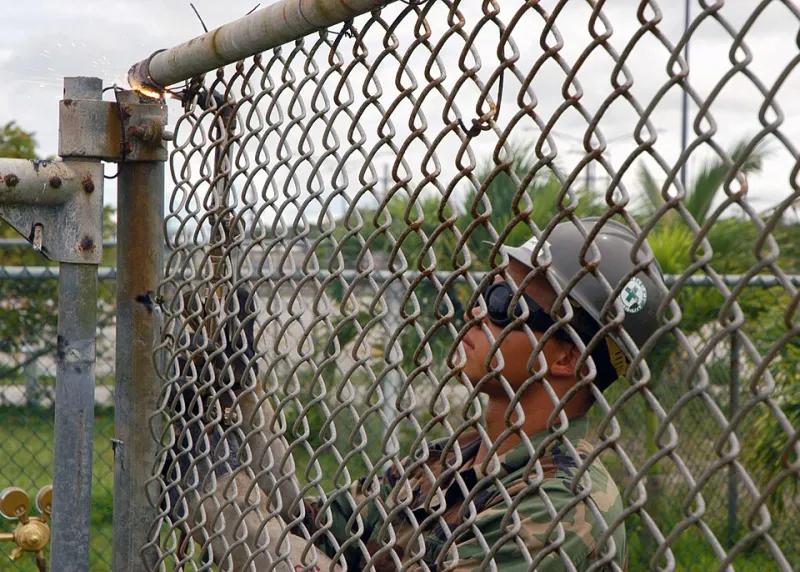
Photo: U.S. Air Force photo by Senior Airman Jonah Bliss, Public domain, via Wikimedia Commons
The United States spends roughly $500 billion each year repairing infrastructure failures that monitoring technology could have anticipated years in advance. Despite the widespread availability of sensor networks, predictive analytics platforms, and asset management software, the institutional structures governing infrastructure maintenance continue to reward crisis response over prevention. Understanding why this paradox persists is essential for any developer, agency, or enterprise client serious about long-term asset performance.
The Technology Is Not the Problem
America's infrastructure sector has access to genuinely sophisticated tools. Vibration sensors embedded in bridge decks can detect micro-fracture propagation months before visible cracking appears. Acoustic monitoring systems identify pipe wall degradation in water distribution networks well ahead of catastrophic failure. Pavement condition algorithms, fed by LiDAR survey data, can model deterioration curves with sufficient precision to schedule intervention at the lowest cost point on that curve.
None of this is experimental. These technologies are deployed across transportation, energy, and water utility networks in cities ranging from Pittsburgh to Phoenix. The data they generate is often comprehensive, timestamped, and actionable.
And yet, the repair bill climbs every year.
The problem is not instrumentation. It is what happens—or more precisely, what fails to happen—after the data is collected.
Budget Cycles That Punish Prevention
One of the most durable structural barriers to preventive maintenance is the annual appropriations cycle that governs most public infrastructure spending. When a budget is assembled for the coming fiscal year, allocating capital to address a bridge component that is currently functioning—even one that predictive models flag as a near-term failure risk—competes directly against addressing facilities that are already visibly deteriorating or operationally compromised.
In that competition, the visible crisis almost always wins.
This is not irrationality on the part of budget officers. It is a rational response to institutional incentives. Elected officials and agency administrators are accountable to constituents and oversight bodies who can see a potholed road or a flooded intersection. They are far less accountable to a probability distribution generated by an asset management platform.
The result is a systematic underfunding of interventions that would be dramatically cheaper if executed on schedule, deferred until they become emergencies, and then funded reactively at several multiples of the original cost.
The Organizational Fragmentation Factor
Predictive maintenance also requires a level of cross-functional coordination that many infrastructure organizations are structurally ill-equipped to deliver. The engineering team that operates a sensor monitoring platform frequently sits in a different department from the procurement team that manages contractor relationships, which sits apart from the finance team that controls capital allocation.
When a predictive alert is generated, translating that signal into an authorized, funded, and contracted maintenance intervention can require navigating approval chains that were designed for reactive workflows. By the time the work order is processed, the intervention window identified by the monitoring system may have already closed—and the component may have failed.
This is not a technology failure. It is a workflow failure. And it is far more common than the industry typically acknowledges.
Private Developers Are Not Immune
It would be convenient to frame the reactive maintenance paradox as a public-sector problem. The reality is more complicated. Private infrastructure developers operating under long-term concession agreements or asset management contracts face their own version of the same dynamic.
When near-term financial reporting cycles create pressure to minimize operating expenditures, preventive maintenance budgets are among the first line items to be reduced. The asset may be privately owned, but the incentive structure can produce outcomes nearly identical to those seen in underfunded public agencies.
The developers who consistently outperform on lifecycle cost are those who have embedded maintenance cost modeling into their project economics from the feasibility stage—treating predictive intervention not as an optional operating expense but as a contractual obligation built into the asset's financial architecture.
Reframing Maintenance as Asset Investment
The most effective reframe available to both public agencies and private developers is a straightforward one: stop categorizing preventive maintenance as an operating cost and start treating it as capital investment in asset longevity.
This is not merely semantic. When preventive intervention is classified as capital expenditure, it becomes eligible for different funding mechanisms, different approval processes, and different performance metrics. It becomes possible to calculate return on investment in terms of failure risk reduction, extended service life, and avoided emergency mobilization costs.
Several state departments of transportation have begun piloting this approach, reclassifying scheduled preventive treatments as capital preservation programs and measuring their performance against actuarial models of failure probability. Early results suggest that every dollar invested in timely preventive intervention can displace between four and seven dollars in future reactive repair costs.
What Institutional Reform Actually Requires
For the maintenance paradox to be meaningfully addressed, three things need to change simultaneously.
First, procurement and contracting frameworks need to be redesigned to allow predictive maintenance findings to trigger expedited work authorizations without requiring full competitive bidding cycles for every intervention. Frameworks modeled on on-call maintenance contracts, pre-qualified vendor pools, and performance-based maintenance agreements already exist in several states and offer a replicable template.
Second, asset management platforms need to be connected directly to budget planning systems rather than operating as parallel reporting environments. When predictive alerts automatically populate capital planning documents and generate cost-of-deferral projections, the case for preventive action becomes part of the standard budget conversation rather than an afterthought.
Third, performance accountability structures need to evolve. Infrastructure agencies and private operators alike should be measured not only on whether they respond to failures quickly, but on whether they reduce failure rates over time. Outcome-based performance metrics aligned with asset health trajectories create the institutional incentive structure that currently does not exist.
The Cost of Inaction Is Already Visible
The $500 billion annual figure is not an abstraction. It represents lane closures that cost regional economies hundreds of millions in productivity losses. It represents water main breaks that disrupt service to hospitals, schools, and industrial facilities. It represents emergency mobilizations that consume contractor capacity that could have been deployed on expansion projects.
The tools to intervene earlier exist. The data to justify intervention is being collected. What remains is the institutional will to act on that data before the failure arrives.
For enterprise clients and infrastructure developers operating at scale, the organizations that solve this problem internally will carry a structural cost advantage into every project they pursue. The maintenance paradox is not inevitable. It is a choice—and the industry has the technical means to make a different one.