Outdated Data Systems Are Quietly Draining Your Infrastructure Projects' Budgets

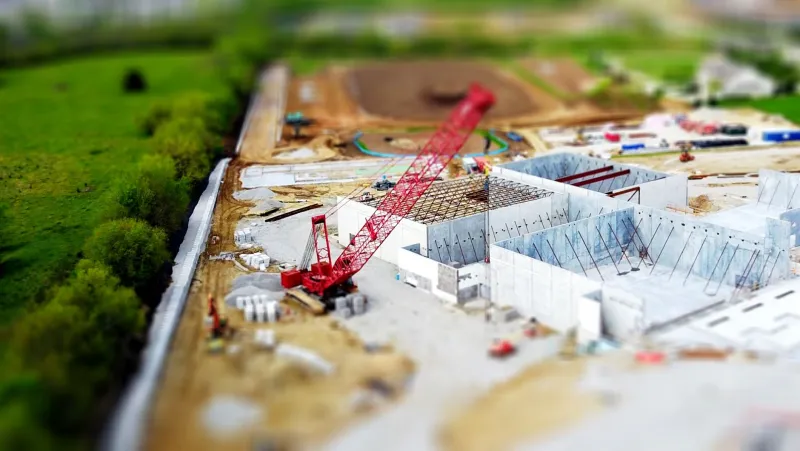
Photo by Photo by Stephen Dawson on Unsplash on Unsplash
When enterprise clients commission large-scale infrastructure programs, the conversation almost always centers on the physical: materials, labor, site conditions, and equipment. Rarely does the discussion turn inward — toward the information systems guiding every decision made from pre-development through final commissioning. That oversight is proving to be an expensive one.
Across the infrastructure development sector, legacy IT and data management platforms are generating losses that rarely appear as a single line item on a project budget. Instead, they accumulate invisibly — embedded in rework hours, missed procurement windows, duplicated reporting efforts, and decisions made on stale or incomplete data. For firms managing multiple concurrent programs worth hundreds of millions of dollars, those losses compound quickly.
The Architecture of Inefficiency
Legacy systems were not designed for the complexity of modern infrastructure development. Many of the platforms currently in use at mid-to-large construction firms were implemented a decade or more ago, when project scopes were narrower, stakeholder coordination was less demanding, and the volume of data generated per project was a fraction of what it is today.
Today's infrastructure programs generate enormous quantities of information: geotechnical reports, environmental assessments, procurement records, subcontractor performance data, schedule updates, regulatory correspondence, and financial forecasts — all of which need to be accessible, current, and connected. When the systems managing that information cannot communicate with one another, project teams compensate with manual workarounds. Spreadsheets proliferate. Data gets re-entered multiple times across disconnected platforms. Version control becomes a persistent problem.
The result is a firm that is technically collecting data but not meaningfully using it — and paying a premium for the gap between the two.
Quantifying the Hidden Costs
The financial impact of data infrastructure deficiencies surfaces across every phase of a project's lifecycle.
During pre-development and planning, fragmented systems make it difficult to synthesize historical project data into accurate cost models. Estimating teams working without reliable benchmarks from comparable prior programs are more likely to produce budgets that underperform — not because of poor judgment, but because the data needed to inform better judgment is inaccessible or unstructured.
During procurement and contracting, delays caused by manual data handling and approval workflows can push subcontractor awards past optimal windows, resulting in higher bids or limited vendor availability. In a supply environment that has grown increasingly volatile, timing matters. A procurement process slowed by three weeks because of a disconnected approval chain is not a minor administrative inconvenience — it can translate directly into cost escalation.
During construction, the absence of integrated project controls creates reporting lag. When field conditions change — a common occurrence on complex infrastructure programs — decision-makers relying on reports compiled from multiple disconnected sources may be working with information that is days or weeks out of date. In fast-moving site environments, that lag produces reactive rather than proactive management, and reactive management is consistently more expensive.
At closeout, the consequences of poor data governance become particularly acute. Firms that cannot produce clean, consolidated project records face extended closeout periods, disputes over change order documentation, and difficulty transferring operational data to asset owners. Each of these outcomes has a cost — in staff time, legal exposure, and client relationship damage.
Industry analysts have estimated that rework alone — much of which is attributable to information failures rather than technical errors — accounts for between five and fifteen percent of total project costs in the construction sector. For a $300 million infrastructure program, even the lower bound of that range represents fifteen million dollars in avoidable expenditure.
The Compounding Problem Across Portfolios
For firms managing multiple concurrent programs, the damage is not additive — it is multiplicative. Inefficiencies that might be manageable on a single project become systemic when replicated across a portfolio. Executives attempting to assess enterprise-level performance across programs are often working from consolidated reports that obscure rather than illuminate underlying issues, because the source data itself is inconsistent or incompatible across projects.
This creates a second-order problem: leadership cannot accurately identify which programs are underperforming, or why, until the losses are already substantial. The data infrastructure deficit does not just cost money at the project level — it impairs the organizational intelligence needed to prevent future losses.
Modernization as a Capital Investment
The case for upgrading internal data systems is sometimes dismissed as an IT expenditure — a cost center rather than a value driver. That framing is incorrect and, for firms operating at enterprise scale, increasingly untenable.
Modernizing project controls platforms, implementing integrated document management systems, and establishing unified data standards across programs should be understood as capital investments with quantifiable returns. Firms that have undertaken this transition report measurable improvements in estimate accuracy, procurement cycle times, and change order resolution speed — all of which translate directly into margin protection.
The infrastructure sector is, by its nature, focused on building things that last. The internal systems guiding that work deserve the same engineering discipline applied to the assets being constructed. A firm that invests rigorously in the quality of its physical output while tolerating systemic fragmentation in its information architecture is operating with a structural vulnerability — one that will continue to generate costs until it is addressed.
The Path Forward
For enterprise infrastructure developers, the starting point is an honest internal audit: not of project outcomes alone, but of the data flows underlying those outcomes. Where is information being entered more than once? Where are decisions being made without access to current data? Where are reporting processes consuming staff time that could be redirected toward higher-value work?
The answers to those questions will not be comfortable. But they will be instructive — and they will form the basis of a modernization roadmap that treats internal data infrastructure with the same seriousness that Slinfra Developers applies to the physical infrastructure programs we engineer and deliver.
The concrete cost of outdated systems is real. The path to eliminating it begins with acknowledging it.