Compliant on Paper, Delayed in Practice: Navigating the Invisible Fault Lines of Infrastructure Permitting

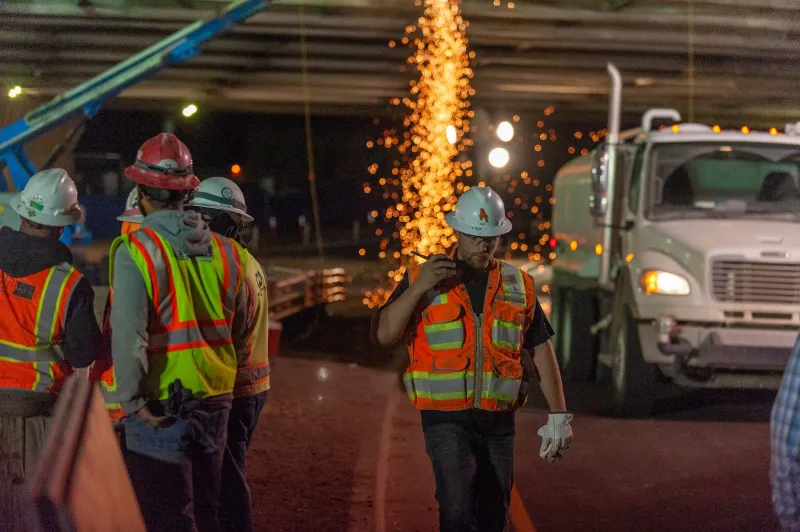
Photo by Photo by Troy Mortier on Unsplash on Unsplash
There is a particular frustration familiar to nearly every enterprise infrastructure team: the moment a project that has cleared every visible hurdle suddenly stalls—not for lack of compliance, but because the permitting ecosystem itself is working against forward momentum. Checklists are completed. Environmental assessments are filed. Agency contacts are in place. And yet, the calendar advances while groundbreaking does not.
This is the permitting paradox. It is not a failure of preparation. It is a structural condition embedded in the way American infrastructure governance is layered across federal mandates, state regulations, and local ordinances—each operating on its own timeline, with its own priorities, and with limited institutional incentive to synchronize with the others.
For enterprise clients planning large-scale infrastructure investments, understanding this paradox is not merely academic. It is a prerequisite for accurate budgeting, credible scheduling, and risk-adjusted decision-making.
Where the Friction Actually Lives
Most project teams enter the permitting process with a sequential mental model: federal approvals unlock state reviews, which in turn enable local sign-offs. In practice, the sequence is rarely so linear. Federal agencies such as the Army Corps of Engineers, the EPA, and the Federal Highway Administration each operate under distinct statutory frameworks with different review timelines and evidentiary standards. When a project touches multiple federal jurisdictions—as most large infrastructure initiatives do—these agencies are not legally required to coordinate their reviews, and historically, they often do not.
The result is a parallel-processing problem masquerading as a sequential one. An enterprise client may receive Army Corps approval for wetland impacts while simultaneously awaiting an EPA response to a Clean Water Act Section 404 comment period that reopened due to a third-party public objection filed in month seven of a twelve-month review. Neither agency is acting improperly. Both are following their mandates. The project, however, is standing still.
State-level environmental review compounds the issue. In states operating under their own mini-NEPA frameworks—California, New York, Washington, and others—a separate environmental impact analysis may be required even when a federal Environmental Impact Statement has already been completed. The standards are not identical. The findings of one review do not automatically satisfy the requirements of the other. Project teams that assume federal compliance transfers to state approval are routinely surprised to find themselves re-litigating settled environmental questions before a different audience.
The Utility Coordination Blind Spot
Among the least-discussed sources of permitting delay is utility coordination—specifically, the gap between permit issuance and the actual availability of utility infrastructure to support construction.
A building permit may be issued by a municipality within a reasonable timeframe. But if the project site requires new electrical service, upgraded water capacity, or relocated gas mains, the permitting authority and the utility provider are typically separate entities operating on entirely different schedules. The local government cannot compel the utility to act faster. The utility, for its part, may be managing a backlog of connection requests across dozens of projects in the same corridor.
For enterprise infrastructure clients, this disconnect can translate into a situation where every permit is technically in hand—and construction still cannot begin because the utility infrastructure needed to support the site is months away from readiness. This is not a permitting failure in the conventional sense. It is a coordination failure that permitting systems were never designed to resolve.
Proactive utility engagement—initiated well before permit applications are filed—is one of the most effective mitigation strategies available. Treating utility coordination as a parallel workstream rather than a downstream task can compress this gap significantly.
Inter-Agency Communication: The Structural Deficit
Perhaps the most underappreciated driver of permitting delay is the absence of formalized communication channels between agencies that share jurisdiction over the same project. In theory, inter-agency coordination is encouraged at both the federal and state levels. In practice, it depends heavily on the initiative of individual project managers within each agency—and on the willingness of those individuals to prioritize coordination alongside their existing caseloads.
When an agency issues a request for additional information, the clock on its internal review typically pauses. If that request is not answered with precision, or if the response triggers a secondary round of questions, the pause extends. Across multiple agencies, these pauses can accumulate into delays measured in quarters rather than weeks.
Enterprise clients can partially offset this dynamic by investing in dedicated permitting liaison functions—either in-house or through specialized consultants—whose explicit mandate is to maintain active communication with each reviewing agency, track open items in real time, and ensure that information requests receive complete, well-documented responses on the first submission rather than the third.
Building Timelines That Account for Systemic Delay
The practical implication for enterprise infrastructure planning is straightforward, if uncomfortable: permitting timelines derived from agency-published review periods are almost always underestimates. A more reliable methodology incorporates historical data from comparable projects in the same jurisdiction, accounts for the probability of comment periods reopening, and includes contingency buffers calibrated to the specific complexity of the regulatory environment.
Several strategies have proven effective in reducing exposure to systemic delay:
Pre-application engagement with key agencies—particularly federal reviewers—can surface potential objections before formal submissions are made, allowing project teams to address concerns proactively rather than reactively.
Phased permitting approaches, where construction is sequenced to begin on portions of a site that have cleared review while other sections remain under evaluation, can preserve momentum without compromising compliance.
Third-party environmental consultants with established relationships at the relevant regulatory agencies can navigate informal communication channels that are invisible to outside parties but consequential to review timelines.
Regulatory risk mapping at the project outset—identifying every agency with potential jurisdiction, the legal basis for that jurisdiction, and the historical review behavior of that agency—provides a foundation for scheduling decisions that reflect reality rather than aspiration.
The Competitive Value of Permitting Intelligence
For enterprise clients selecting infrastructure development partners, the ability to navigate permitting complexity is not a secondary consideration. It is a core competency that directly affects project economics. A developer who enters the permitting process with a sophisticated understanding of inter-agency dynamics, utility coordination timelines, and state-specific environmental review requirements is not simply managing risk. They are creating schedule certainty that translates directly into capital efficiency.
The permitting paradox is unlikely to resolve itself. The regulatory architecture that produces it reflects decades of legislative history, jurisdictional negotiation, and institutional inertia. What enterprise clients can control is how intelligently they engage with that architecture—and how early they begin.