When Perfect Blueprints Meet Imperfect Reality: Closing the Gap Between Design Precision and Field Performance

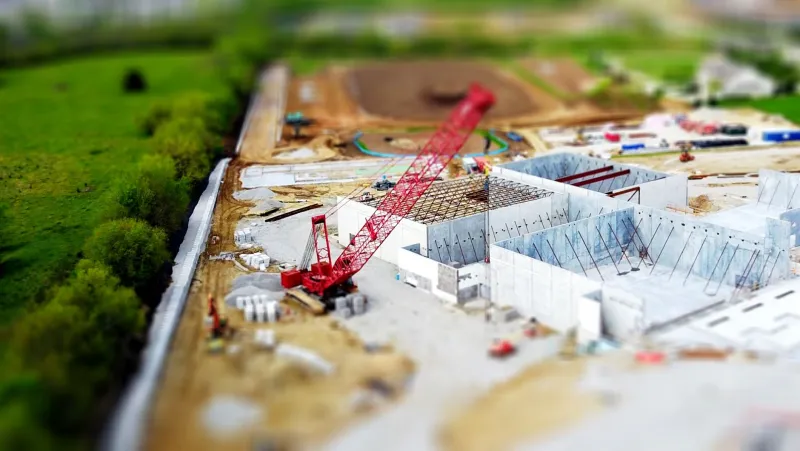
Photo by Photo by Thatselby on Unsplash on Unsplash
There is a persistent assumption in infrastructure development that precision is protection. If the geotechnical surveys are thorough, the structural calculations verified, and the material specifications met to the letter, the finished asset should perform as designed. It is a logical belief—and one that has been quietly contradicted by decades of field data.
Across the United States, infrastructure assets built to specification continue to degrade ahead of schedule, underperform against modeled outputs, and in the most costly cases, fail outright. The culprit is rarely negligence. More often, it is the invisible distance between how an engineered system behaves in theory and how it behaves when introduced to the compounding, unpredictable pressures of the physical world.
Understanding that distance—and designing to account for it—has become one of the defining challenges for infrastructure developers working at enterprise scale.
The Controlled Environment Problem
Engineering design is, by necessity, an exercise in abstraction. Material properties are drawn from laboratory testing conducted under standardized conditions. Load assumptions are derived from historical data and probabilistic modeling. Environmental factors are incorporated as variables within defined ranges. The result is a design that is mathematically sound and technically defensible—but optimized for conditions that may never precisely exist in the field.
Consider a reinforced concrete bridge deck specified for a freeze-thaw cycle frequency derived from regional climate averages. If actual freeze-thaw cycles in a given corridor exceed historical norms—a trend accelerating across the Midwest and Northeast—the deck may begin to exhibit micro-cracking years ahead of projections. The specification was met. The design was correct. The asset still underperforms.
This is not an edge case. It is a structural feature of how infrastructure engineering translates from the drawing board to the ground. The gap between modeled conditions and deployed reality is not a flaw in the process; it is an inherent property of complex systems operating in dynamic environments. The question is not whether that gap exists, but how deliberately developers choose to address it.
Where Failure Margins Get Engineered Out
In competitive project delivery environments—particularly those involving public procurement or fixed-price contracting—there is consistent pressure to optimize designs toward the minimum viable specification. Safety factors are maintained because they are mandated, but discretionary performance margins are frequently trimmed in the interest of cost competitiveness.
This is a rational response to procurement incentives. It is also a mechanism by which real-world performance risk is systematically transferred from the design phase to the operational phase, where it is far more expensive to address.
The irony is that the projects most aggressively value-engineered during design are often the ones that generate the largest corrective expenditures post-commissioning. Deferred maintenance costs, accelerated rehabilitation timelines, and unplanned service interruptions routinely exceed the savings captured during design optimization—a dynamic that enterprise clients are increasingly equipped to recognize and resist.
Adaptive Failure: When Systems Behave Unexpectedly Under Load
Material degradation is one dimension of the real-world performance problem. Adaptive failure is another, and it is considerably less intuitive.
Adaptive failure occurs when infrastructure systems encounter conditions that fall outside the behavioral assumptions embedded in their design—not catastrophically, but incrementally. A drainage network designed for historical storm event frequencies begins to experience chronic capacity exceedance as precipitation intensity increases. A pavement structure specified for projected traffic loads encounters axle weight distributions that differ from modeled assumptions as freight patterns shift. A utility corridor engineered for a defined soil chemistry profile encounters groundwater intrusion that accelerates corrosion at rates the original design did not anticipate.
In each case, the system is not broken. It is adapting—degrading along pathways that were not modeled because the inputs that drive them were not foreseen. The cumulative effect of these adaptive failures is an asset that reaches the end of its functional service life significantly ahead of schedule, with consequences that ripple across the enterprise clients and communities it serves.
Building Failure Margins Back Into the Design Phase
Forward-thinking infrastructure developers are responding to this dynamic by treating real-world performance uncertainty as a first-class design input rather than a post-construction contingency.
In practice, this means several things. It means expanding the range of environmental and operational scenarios against which designs are stress-tested, moving beyond historical averages toward probabilistic modeling that accounts for tail-risk conditions. It means incorporating material performance data drawn not just from laboratory certification but from field monitoring of comparable assets operating in comparable environments. And it means building explicit performance margins into designs—not as a concession to uncertainty, but as a deliberate engineering decision with quantified rationale.
Some of the most sophisticated project teams in the US infrastructure sector are now conducting what might be described as structured adversarial testing during the design phase: deliberately modeling failure pathways, identifying the conditions under which each pathway becomes active, and engineering countermeasures into the base design before a single cubic yard of concrete is poured. This approach adds time and cost to the pre-construction phase. It reliably reduces total lifecycle cost.
The Role of Operational Data in Closing the Loop
Design-phase stress testing is most powerful when it is informed by operational data from previously delivered assets. Infrastructure developers that maintain robust performance monitoring programs across their project portfolios are able to identify systematic gaps between design assumptions and field behavior—and feed those findings back into the design standards applied to future projects.
This feedback loop is not universally practiced. Many developers deliver projects, hand them off to asset owners, and move on without capturing the longitudinal performance data that would allow them to refine their design assumptions over time. The result is an industry that has access to enormous quantities of infrastructure performance information but harvests relatively little of it in ways that improve future design quality.
Developing the organizational infrastructure to capture, analyze, and operationalize field performance data is itself a meaningful investment. For developers operating at scale across multiple project types and geographies, it is also one of the highest-return investments available.
Reframing What "Built to Specification" Actually Means
The broader shift underway in leading infrastructure development organizations is a reframing of what it means to build to specification. In the traditional model, specification compliance is the endpoint: if the delivered asset meets the documented requirements, the developer's obligation is fulfilled.
In an emerging alternative model, specification compliance is a floor, not a ceiling. The more meaningful standard is whether the delivered asset performs as intended across the realistic range of conditions it will encounter during its service life—including conditions that were not fully anticipated at the time of design.
Reaching that standard requires developers to invest more heavily in pre-construction intelligence, to design with explicit acknowledgment of uncertainty, and to maintain relationships with asset owners that allow field performance data to inform future work. It is a more demanding standard. It is also the one that enterprise clients, increasingly aware of total lifecycle costs, are beginning to require.
At Slinfra Developers, the gap between design precision and field performance is not treated as an acceptable unknown. It is treated as an engineering problem—one with solutions that are available to developers willing to invest in finding them before construction begins rather than after.