Expiration Dates for Engineering: Why a Ten-Year-Old Soil Report Should Not Be Trusted With a Hundred-Million-Dollar Decision
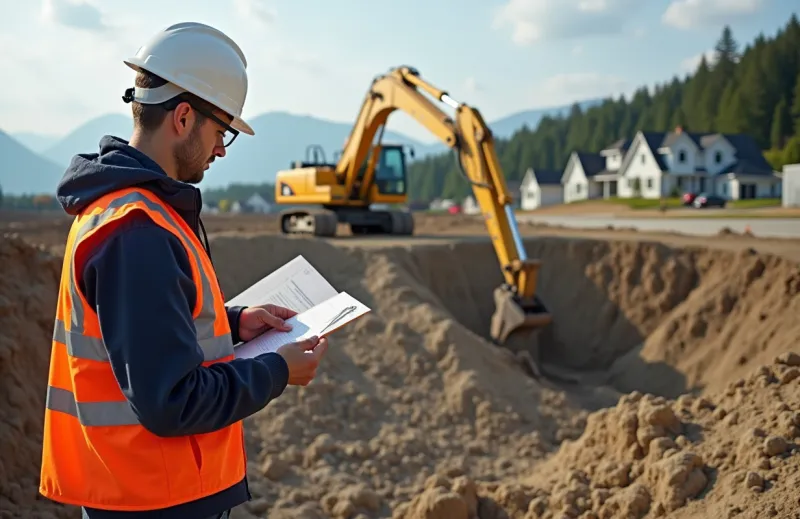
Photo: geotechnical report documents construction site engineer reviewing soil data, via www.westrekgeotech.com
There is a peculiar asymmetry at the heart of American infrastructure procurement. We demand current insurance certificates, current bonding capacity, and current licensure from every firm on a project. Yet the foundational documents — the geotechnical investigations, traffic counts, and environmental assessments that shape the entire design — are routinely accepted at face value regardless of when the data was gathered.
A boring log from 2013 is treated with the same authority as one drilled last month. In my view, this is a habit the industry should abandon, and procurement contracts are the place to start.
The Ground Does Not Wait for the Contract
Conditions beneath a site are not static. Groundwater tables shift with regional pumping and climate volatility. Adjacent construction alters soil stress states. Urban infill, utility installations, and even seasonal extremes can materially change what an excavator will find. Surface conditions move faster still: traffic volumes post-pandemic bear little resemblance to 2015 counts, and land use around a corridor can transform within a single development cycle.
Yet the standard practice remains to pull the old report, cite it in the new one, and move on. The savings are measured in weeks. The exposure is measured in change orders.
What Revalidation Would Actually Look Like
The proposal is not bureaucratic expansion for its own sake. It is a defined shelf life, written into the contract:
- Geotechnical reports: revalidated within 24 months of design submission, with a minimum of new borings at critical structures rather than a full repeat investigation.
- Traffic and demand studies: revalidated within 12 months for projects where volume assumptions drive sizing.
- Environmental assessments: condition-specific reverification whenever site disturbance, adjacent development, or regulatory criteria have changed.
Crucially, revalidation should be scoped by risk. A drainage improvement on stable ground warrants a lighter touch than a deep foundation on reclaimed land. The point is not more paperwork; it is a deliberate, documented decision that yesterday's data still describes today's site.
The Cost of the Alternative
Critics will note that re-investigation costs money, and they are right. But the comparison is never revalidation versus nothing. It is revalidation versus the known price of discovering changed conditions mid-construction — claims, redesign, delay, and the corrosive litigation that follows. The construction industry's disputed-change ledger is, in significant part, a record of assumptions that were once true and no longer were.
There is also an institutional cost. When teams build on stale documents, they inherit stale conclusions — alignments fixed by old constraints, capacities sized to old demands. The project becomes a monument to the year the report was written.
A Modest Contract Clause
None of this requires legislation or industry-wide upheaval. It requires owners to write one sentence into their procurement documents: engineering basis-of-design data must be revalidated within a defined window, at defined scope, with discrepancies formally dispositioned before design freeze.
Firms that embrace this will bid with sharper numbers and defend fewer claims. Owners who demand it will buy infrastructure grounded in the site as it exists — not as it existed when someone else happened to look.
Dirt doesn't lie. But documents age. It is time our contracts acknowledged the difference.