Where the Map Decides the Money: Rethinking Site Selection Before the First Survey Stake

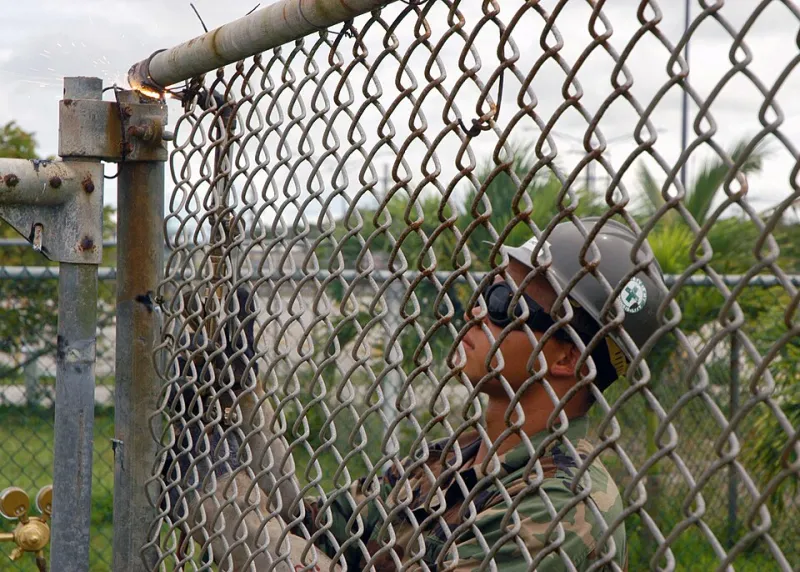
Photo: Benh LIEU SONG (Flickr), CC BY-SA 4.0, via Wikimedia Commons
In infrastructure development, few decisions carry the consequences of the first one: where to build. A site choice ripples through every budget line, every permit application, every construction schedule, and every decade of operational cost that follows. Yet across the American development landscape, the selection process often receives a fraction of the scrutiny applied to structural design or cost estimating. Teams that will spend months perfecting a facility's engineering may spend weeks—sometimes days—settling on the ground it stands on.
That asymmetry is becoming harder to defend.
The Cheapest Parcel Fallacy
For decades, the default logic was straightforward: acquire the least expensive parcel that meets basic zoning requirements, and let engineering solve the rest. This 'cheapest dirt wins' mentality made a certain sense when land was the dominant fixed cost and information was scarce.
Neither condition holds anymore. Land acquisition typically represents a modest slice of total project capital, while site-driven complications—unstable soils, inadequate utility capacity, contested entitlements, flood exposure—routinely consume multiples of any initial savings. A parcel acquired at a discount in a rural exurb can generate millions in extended utility extensions, road improvement obligations, and geotechnical remediation that no one priced at the negotiating table.
The pattern repeats across corridors and asset classes. The problem is rarely that developers are unaware of site risk. It is that the analysis arrives too late, after the option has been signed and the capital committed.
What Location Intelligence Actually Looks Like
A new generation of developers is inverting the sequence, treating site selection as a data problem rather than a real estate transaction. The practice—often called location intelligence—layers multiple independent datasets into a composite picture of a site's true buildability and long-term risk profile.
The layers typically include:
- Regulatory posture: Zoning overlays, entitlement history, and the track record of the local permitting authority—not just current code, but how that code is actually applied.
- Utility capacity: Verified water, sewer, power, and broadband headroom, sourced from providers rather than sales brochures. Capacity shortfalls discovered after closing become change orders.
- Subsurface history: Geotechnical borings, historic land use records, and mapped fill activity. A parcel that once hosted a quarry or a gas station carries a legacy that follows the title.
- Labor catchment: Commute-shed analysis of skilled trades availability, because a technically sound site with no welders within ninety minutes is a schedule problem in disguise.
- Climate and hazard modeling: Forward-looking flood, wind, heat, and wildfire projections, not merely historical FEMA designations.
No single layer is decisive. The value comes from the intersections—discovering, for instance, that a parcel with excellent highway access also sits atop a shallow water table in a county with a two-year drainage review queue.
De-Risking Years Ahead of Capital
The most disciplined practitioners now run this analysis before an option agreement is executed, sometimes two or three years ahead of groundbreaking. The logic is simple: site risk is cheapest to retire when nothing has been spent against it. A negative finding at the screening stage costs the price of a data subscription. The same finding after design development costs redesign fees, schedule slip, and in some cases a written-down acquisition.
This front-loading also changes the conversation with enterprise clients and lenders. A developer who can present a documented, multi-layer site rationale—complete with quantified residual risk—negotiates from a fundamentally stronger position than one presenting an attractive rendering and a purchase price. Due diligence that once lived in a banker's checklist becomes a competitive asset.
The Broader Shift
There is a cultural component to this transition. Site selection has traditionally been the domain of brokers and landmen, rewarded for closing deals rather than for walking away from them. Location intelligence does not replace that expertise; it gives it a counterweight. The best land teams now measure themselves partly on the bad parcels they screened out early.
For an industry that has grown fluent in BIM, predictive scheduling, and digital twins, the persistence of intuition-driven site selection is an anomaly. The ground beneath a project is the one input no redesign can change. It deserves the same analytical machinery as everything built on top of it—and increasingly, the developers who understand that are the ones whose projects finish on the terms they promised.