Standing Behind the Structure: Why the Decades-Long Guarantee Is Becoming Infrastructure's Real Currency
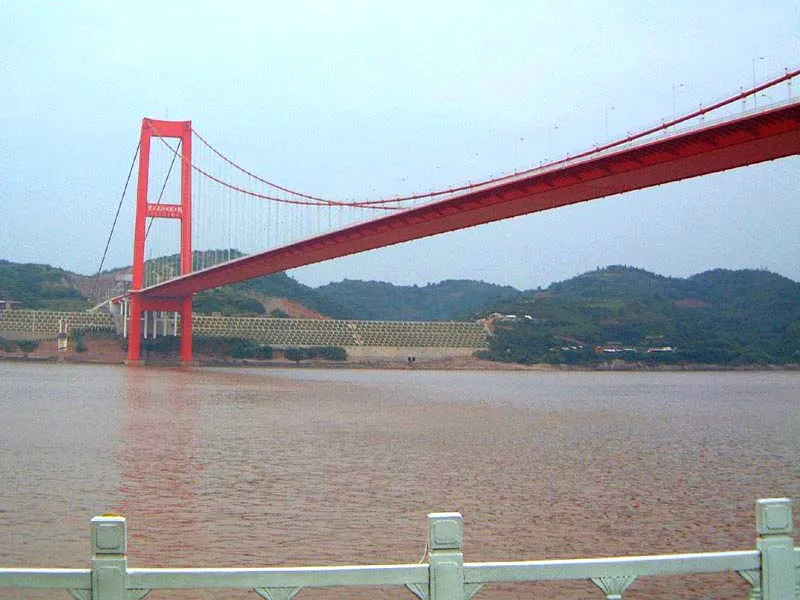
Photo: Unknown, CC SA 1.0, via Wikimedia Commons
There is an old joke in American construction: the lowest bidder is merely the highest bidder minus everything they intend to cut. Enterprise clients have lived with that arithmetic for a century, and they have the change orders to prove it. But a quieter shift is underway in how major infrastructure work is bought and sold—one that may matter more than any material or method innovation of the past decade.
The shift is this: the willingness to stand behind a structure for thirty years is becoming the decisive competitive advantage. Not the lowest number. Not the fastest schedule. The guarantee.
From Handoff to Handshake
The traditional model of infrastructure delivery is a handoff. The builder completes the work, the owner accepts it, and responsibility transfers—along with all the risk of premature failure, underperformance, and deferred decay. The builder's incentive ends at substantial completion. The owner's exposure begins there and runs for the life of the asset.
Anyone who has operated a public asset knows how that story ends. Roofs fail at year twelve instead of twenty. Joint seals give out early. Mechanical systems drift out of specification, and by year fifteen the owner is funding a remediation program nobody budgeted. The builder, meanwhile, has moved on to the next bid.
Lifecycle models invert this arrangement. Under performance-based contracting, the developer remains financially responsible for the asset's condition long after the ribbon-cutting. Availability payment structures—common in public-private partnerships—pay the developer only while the asset performs to defined standards. A lane closed for unplanned repairs is a lane not earning its payment. A bridge that deteriorates ahead of schedule becomes the developer's cost center, not the public's.
When that structure is in place, something remarkable happens to design decisions. Durability stops being a value-engineering casualty and becomes a profit driver. Spending more upfront on a deck design that lasts forty years instead of twenty-five is no longer a cost the builder pushes onto the owner—it is an investment the builder recaptures through decades of lower maintenance liability.
The Sorting Effect
This is why long-horizon commitments function as a sorting mechanism. Any competent contractor can promise a low price and walk away at completion. Far fewer can credibly commit to standing behind performance in year twenty-two.
That credibility cannot be faked. It requires balance-sheet strength to survive warranty exposure across economic cycles. It requires construction quality disciplined enough that the firm actually expects its guarantees to hold. It requires maintenance capability—either in-house or through durable partnerships—because the guarantee is only as good as the asset stewardship behind it. Opportunistic bidders, by definition, do not have these things. The lifecycle model prices them out of the room, or should.
Some in the industry will object that thirty-year commitments concentrate unacceptable risk in private hands, that actuarial uncertainty over such horizons invites either padded pricing or eventual default. That objection deserves a fair hearing. But the answer is not to retreat to the handoff model, which simply relocates all the risk to the party least equipped to manage it. The answer is honest risk allocation: guarantees calibrated to what can actually be predicted, with transparent measurement protocols and sensible limits—rather than symbolic promises that neither side expects to survive contact with reality.
What Enterprise Clients Should Demand
For organizations procuring major infrastructure in this environment, the questions worth asking have changed. Before evaluating bids, ask:
- What does the builder's own portfolio look like at year fifteen? A firm confident in its longevity guarantees will show you its aging assets proudly.
- Is the warranty funded or aspirational? Performance security, escrowed retainage, and insurance-backed guarantees tell you whether the promise has a balance sheet behind it.
- How are performance metrics measured, and by whom? Vague availability definitions are where guarantees go to die. Insist on objective, instrumented, independently verifiable standards.
- Does the builder hold long-term maintenance capability, or is it a paper partnership?
The New Frontier
The competitive frontier in American infrastructure is moving from price to permanence. The firms that will dominate the next generation of enterprise work are not those that bid cheapest, but those prepared to make a thirty-year handshake and keep it. Owners should expect nothing less—and structure their contracts so that nothing less is acceptable.